Displaced International Calls for a Halt to Planned Afghan Removals Through Pakistan and Urgent Congressional Protection Measures
Displaced International (DI) expresses grave concern over reports of a planned U.S. operation to remove Afghans to Pakistan for onward expulsion to Afghanistan. The operation could affect more than 150 Afghans, with a flight potentially departing as early as November 2. DI urgently calls on the Trump Administration to suspend these planned removals and ensure that no individual is transferred into persecution, torture, or foreseeable onward removal to danger.
“Afghans must not be returned to the dangers they fled—and that continue to drive displacement,” said Ambassador Ashraf Haidari, Founder and President of Displaced International. “America can uphold its immigration laws and protect national security while honoring its commitments and protecting those at risk. Congress should act urgently to provide temporary protection and durable pathways, while the Administration ensures that no one is removed before their protection needs receive meaningful review.”
The risks are documented. A July 2025 report by UNAMA and the UN Human Rights Office, based on interviews with 49 involuntary returnees, documented torture, ill-treatment, arbitrary arrest and detention, and threats to personal security. It identified particular risks for women and girls, people affiliated with the former government and security forces, media workers, and civil society.
These planned removals arise amid a wider return crisis. UNHCR’s regional data portal records 1,366,140 returns to Afghanistan in 2026 through October 24, including 619,030 deportations. These are regional figures, not U.S. removal totals, and include voluntary repatriation and other returns as well as deportations. Their scale underscores the pressure on vulnerable families and receiving communities.
Protection must be assessed individually and must not depend solely on whether someone served the United States. Women and girls, minorities, journalists, human rights defenders, former public servants, and people whose family relationships or perceived political affiliations expose them to retaliation also require careful consideration.
Criminal accountability and protection against torture are distinct obligations. Criminal conduct must be addressed through lawful proceedings. While convictions can restrict eligibility for certain immigration benefits, they do not automatically eliminate protection against return to torture under applicable U.S. law.
DI reiterates its earlier appeals against unsafe returns from Pakistan and the abandonment of Afghan allies in third countries. It also renews its global call to end gender apartheid as a driver of displacement. Protecting those who flee must accompany sustained action to restore the rights of those who remain.
Displaced International calls for the following measures:
1. Suspend unsafe removals and uphold due process. The Administration should halt the reported operation pending meaningful, individualized protection assessments. Individuals must receive adequate notice of proposed destinations, access to counsel and interpretation, and an effective opportunity to seek review. Third-country arrangements must not circumvent protection obligations or binding court orders.
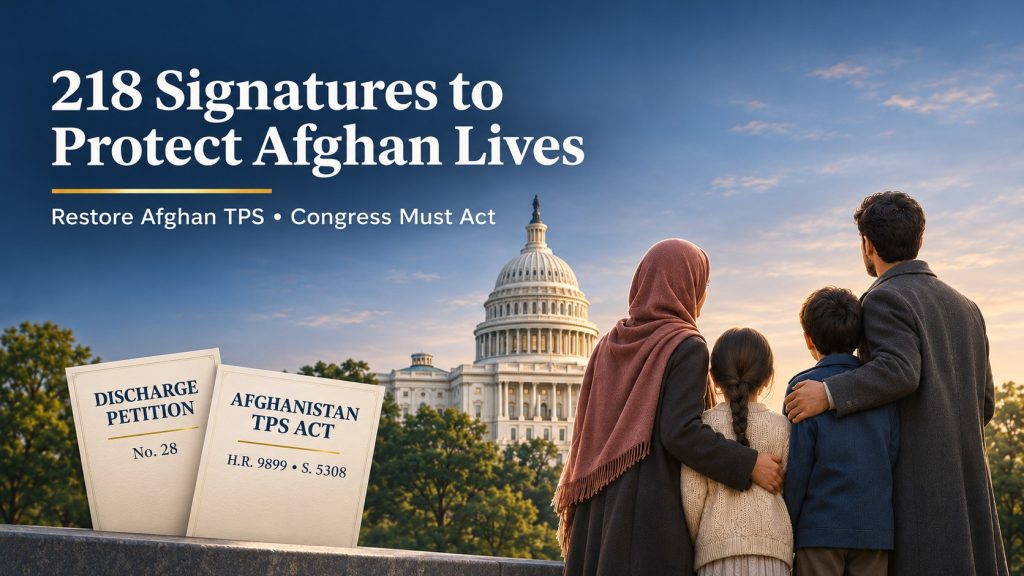
2. Enact temporary protection without delaying immediate safeguards. Congress should advance the bipartisan Afghanistan TPS Act of 2026, H.R. 9899, and its Senate companion, S. 5308. The House bill would designate Afghanistan for Temporary Protected Status through July 1, 2029, enabling eligible applicants to obtain temporary protection and employment authorization, subject to statutory requirements and security checks. House members should support the planned discharge effort once available, and senators should support prompt consideration of the companion legislation. These bills are not yet law and would not automatically protect every Afghan facing removal. Immediate safeguards cannot wait for their enactment.
3. Establish a durable pathway to permanent residence. Congress should advance the Afghan Adjustment Act, H.R. 4895, which proposes conditional permanent residence for eligible Afghans following required screening, with procedures for subsequent removal of conditions. Temporary protection should provide a bridge to lasting security rather than repeated uncertainty.
4. Honor commitments and support integration. Congress should provide sufficient Special Immigrant Visa capacity and processing resources, sustain safe resettlement and family reunification pathways, and fund employment services, language learning, education, and trauma-informed care. The Administration should ensure timely adjudication of Afghan applications for asylum, lawful status, and employment authorization. Enabling eligible Afghans to work and rebuild their lives strengthens families and American communities.
5. Require transparency, oversight, and enforceable safeguards. Congress should demand disclosure of arrangements governing transfers through Pakistan or other countries, including travel-document procedures and safeguards against onward removal. Relevant committees should require DHS to verify compliance with court orders and report on notice, protection screening, access to counsel, and review before removal. Congress should adopt enforceable protections and provide resources to prevent unsafe transfers and unnecessary adjudication delays.
6. Address displacement’s root causes. The United States should work with the United Nations and regional partners toward an Afghan-owned, inclusive political process and verifiable improvements in human rights, particularly the rights of women and girls. Humanitarian assistance and support for host communities must accompany diplomacy addressing the conditions that force Afghans to flee.
DI encourages constituents, veterans, Afghan Americans, and community organizations to engage their representatives and senators. AfghanEvac is organizing a November 9–11 advocacy initiative in Washington, with congressional meetings planned for November 9–10 and a Veterans Day gathering on November 11. Those unable to travel can contact congressional offices directly to support protection legislation and oversight.
DI urges the United Nations Secretary-General to engage concerned governments on safeguards against forced returns and practical arrangements for durable protection. Voluntary repatriation must be freely chosen, informed, safe, and dignified.
Keep the promise. Protect Afghan lives. Turn bipartisan commitments into lasting protection.
Related DI Appeals:
- Open Letter to President Donald J. Trump and the United Nations Secretary-General on Behalf of Displaced Afghans Worldwide
- Displaced International Statement of Concern: Do Not Abandon U.S. Afghan Allies to Congo, Taliban Rule, or Indefinite Limbo
- Displaced International Calls for an Immediate Halt to the Forced Deportation of Afghan Refugees from Pakistan
- End Gender Apartheid as a Key Cause of Migration from Taliban-Ruled Afghanistan